Garage Door Off Track Repair in Marquette, MI
First the door is braced. Then it is walked back onto straight track with sound rollers, and whatever pushed it out gets fixed so the problem doesn't come back.
A door with rollers outside the track, a tilt, a jam or a bent panel is off track; stop using it and don't run the opener. Marquette's owner-occupancy rate is 46.3% (Census), so renters should tell the landlord before booking.
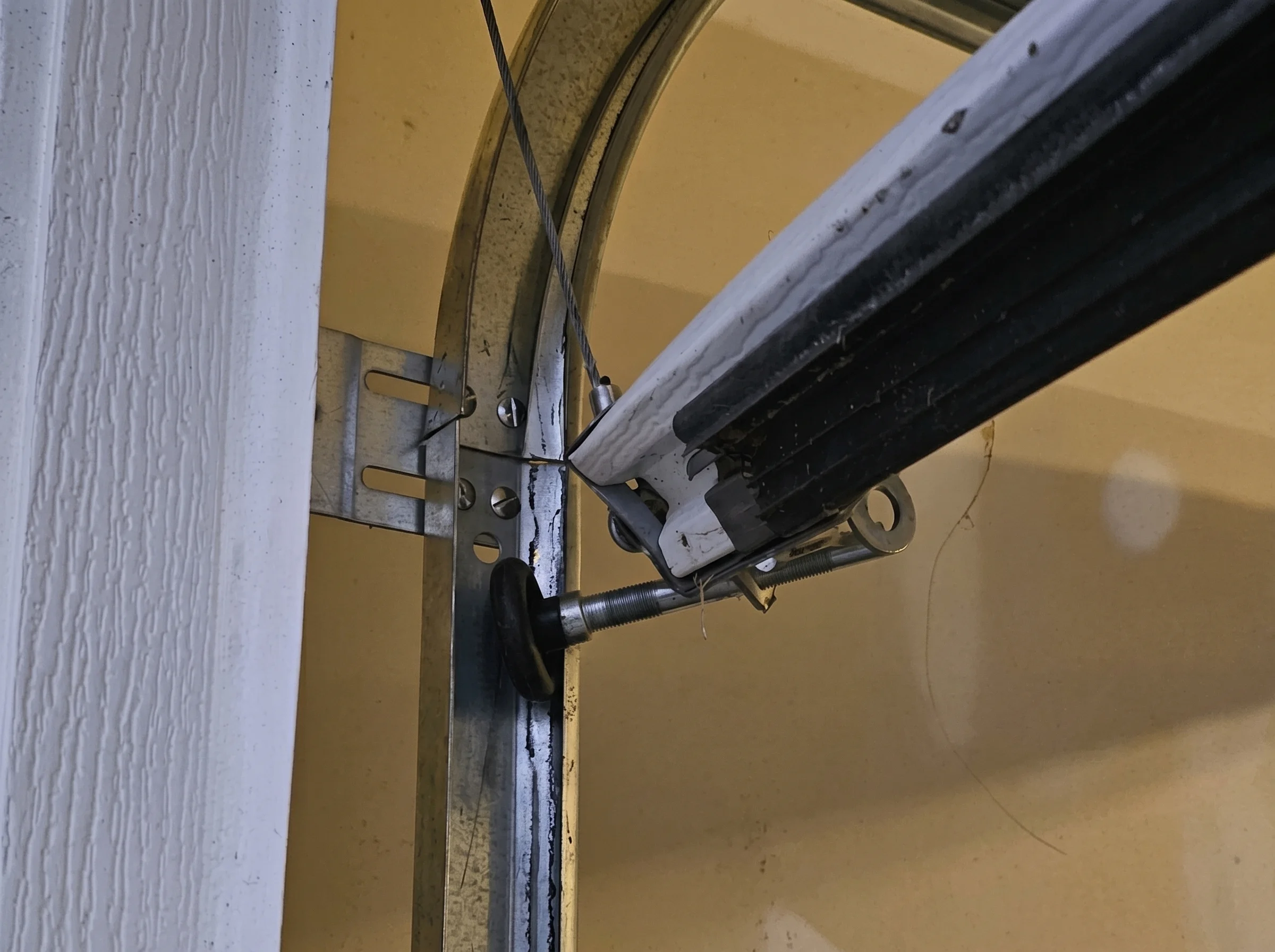
How a derailed door looks
One or more rollers out of the channel, typically down low on the door or in the curve where track bends up toward the ceiling.
A door that's crooked or jammed, frequently halfway up.
A panel that's bent or creased where the opener pushed on against a stuck door.
Track that is clearly bent, dinged, or separated from the wall.
Scraping, grinding or popping heard in the moments before it jumped.
Door out of its track? Keep the opener off. Let us know which side slipped and how it happened.
Contact UsWhat knocks a door off track
Bumper contact
Reversing into a shut or partly raised door is the top culprit, and the lowest section of track usually gets bent too.
A cable that let go
One corner drops, the door skews and rollers pop loose. For the cable half of that story, read cable repair next.
Failing rollers
When a bearing seizes, the wheel drags instead of turning and leaps out at the next rough spot.
Slack or twisted track
Vibration gradually loosens the brackets fastening track to the wall, and the rails drift apart until a roller escapes.
Clutter in the door's path
A bin, mower or, in a town with about 100 inches of snow, a shovel or ice chunk snagged by the door.
Secure the area
Keep the opener off
It keeps driving the door and may crumple panels or rip the track from the wall.
Don't pull the emergency release with the door partly raised and off its track; it can crash down or slide out of the rails altogether.
Hammering rollers back in is a bad idea while the door is loaded. Spring tension is still present, and the door can jump suddenly.
Stay out from under the door, and mention a vehicle stuck inside when you reach out.
What a repair includes
The door gets braced so it cannot drop or shift mid-job, and stored spring tension is handled as the job requires.
Damage gets sized up
How many rollers, how much track, whether any panel is bent, and whether a cable or spring set things off.
Track gets bent back or replaced
Slight bends can be bent back; creased or torn lengths come out.
Rollers worn out or broken are replaced, and hinges checked, since a cracked one will launch a roller again.
The door is set back in the track and cycled fully, then the opener's force is rechecked against the U.S. Consumer Product Safety Commission reversing rule.
Describe what the door does
Just a couple of lines will do. You needn't know what any part is called; what you notice is enough.
Rollers
A door's smoothness and noise level come mostly from its rollers, and they wear out long before the door itself.
Plain steel rollers are the budget design. They clatter, and they chew at the track as they wear down.
Nylon rollers on sealed bearings run quiet and need almost no oil at all, even in cold weather.
Wobble, flat spots, cracked wheels or locked bearings mean a roller has reached the end.
A door that's merely noisy rather than damaged often needs just new rollers, which commonly happens during a maintenance visit.
What affects off-track repair costs
Extent of the derailment
A pair of rollers out at one corner versus a door hanging free.
Track condition
Whether lengths are bent back or replaced, on one side or both.
New rollers and hinges where required.
Bent or split door panels
Panels bowed far enough may need replacing, and an older door's panel can be hard to match.
A cable or spring fault that triggered the derailment.
When a panel can't be rescued at all
A hard blow can crush panels past the point of straightening. A single panel can often be swapped while the rest stays, so long as the maker still sells the same one, which is hit or miss on older doors.
If not, or several panels are hurt, garage door installation lays out your replacement options in detail.
Quick answers
Can I put a roller back in the track on my own?
A lone roller that popped out at the bottom of a shut door, with straight track and no loose cable, can sometimes go back in. Anything beyond that, stop: the door is heavy, spring-loaded, and can move without warning.
Why does it always slip out on the same side?
Typically a slightly misaligned track, a slack bracket, or a cable on that side that has lost its adjustment. If the cause isn't corrected, putting the door back just sets up the next derailment.
Do the tracks need oil?
No. Wipe them clean and leave them dry, since oil on the rail picks up grit. Bearings, hinges and springs are the places that get lubricant.
More door services
Garage Door Cable Repair
Lift cables that fray, part or slip, plus doors hanging unevenly.
Read more →Garage Door Spring Repair
Springs that snapped, replaced with units matched to the weight of the door itself.
Read more →Garage Door Installation
Doors of steel, wood, composite or glass, made to suit your garage opening, whatever its size.
Read more →Reach out
Say where the door is stuck (shut, up, or in between), which side slipped out, whether anything struck it, and if a cable appears slack.
A photo of both sides, taken from a few feet back, helps the most when you send it over.