Garage Door Maintenance in Marquette, MI
A service visit goes over each moving or load-bearing part, resets whatever has shifted, oils the right points, and flags wear while the door still runs fine for you.
A door in daily use takes a beating in Marquette, where National Weather Service normals add up to roughly 100 inches of snow from November through April. Finding a tired spring or frayed cable now beats finding it on a dark morning.
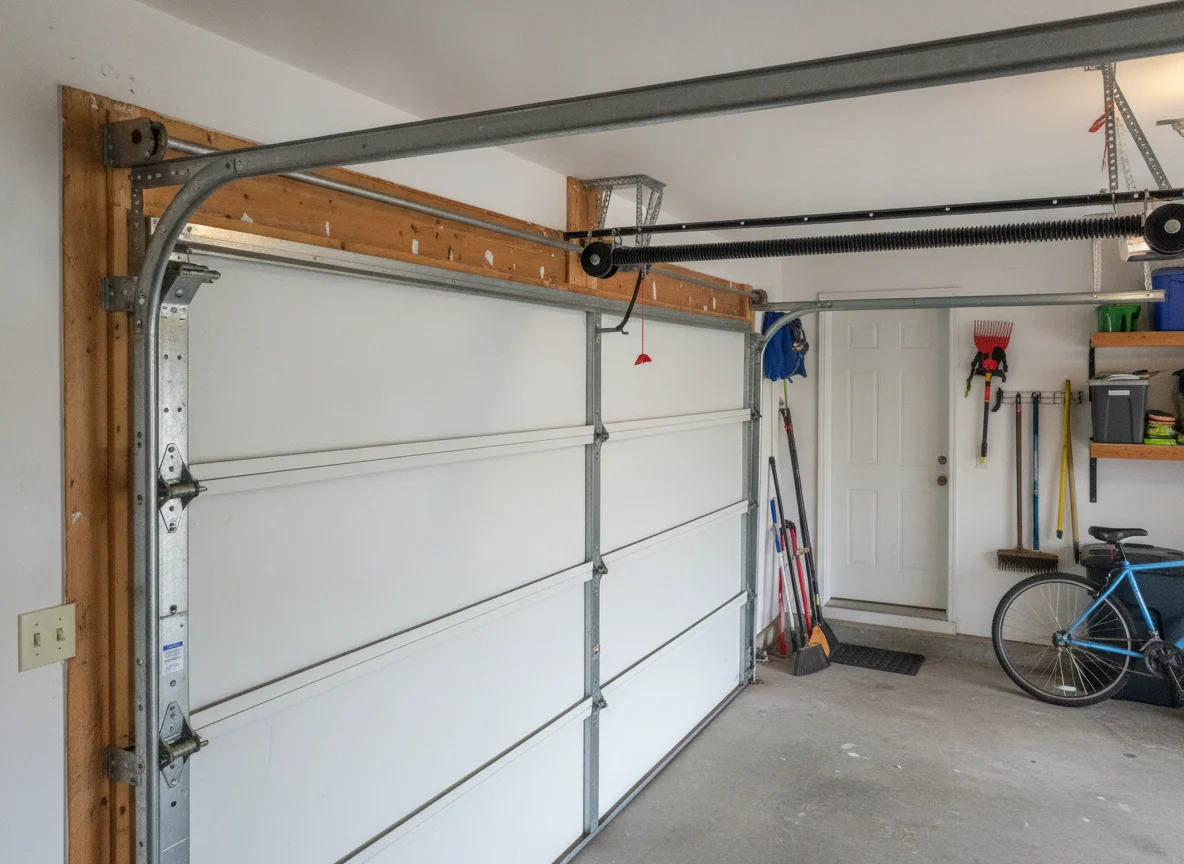
Parts that get inspected
Springs
Coils examined for gaps, stretch, corrosion and lopsided wear; door balance tested.
Cables
Examined for fraying and rust, particularly at the lower brackets, and for equal pull on both sides.
Hinges and rollers
Loose, cracked or worn pieces are noted and the moving points oiled.
Track
Examined for dents, loose brackets and misalignment, then cleaned.
Fasteners
Hinge, bracket and track bolts get snugged, because every cycle shakes them a little looser.
The opener
Chain or belt slack, open and close limits, and closing force are set.
Auto-reverse
A closing door must turn around if the beam is interrupted or if it lands on something in its path.
Bottom seal and weatherstripping, inspected for gaps where meltwater, drafts and mice sneak in.
By the end you should know which parts are wearing and why, so acting now or watching them is your decision.
Is the door noisier, rougher or slower than before? Describe the change and we'll go from there.
Contact UsWhen to book one
It has grown louder: grinding, squealing, or a heavy bang as it finishes its travel.
It shudders along or loses speed midway.
It drops hard, or one corner lands well ahead of the other.
You hear the motor laboring harder than it used to.
No one remembers its last inspection, and it runs every single day.
Describe what the door does
Just a couple of lines will do. You needn't know what any part is called; what you notice is enough.
Checks you can run yourself
A few quick checks now and then can catch trouble early:
Look up at the springs and cables each month from floor level with the door shut, watching for a gap in the coil or loose strands. Never touch either.
Try the auto-reverse
Openers built from 1991 forward must have entrapment protection under a U.S. Consumer Product Safety Commission rule. Set a board in the path: the door must reverse on contact, or the opener stays off.
Probe the sensors
Pass your foot or a broom through the beam mid-close. The door should halt and rise.
Oil only the proper spots
Spray hinges, roller bearings and springs with a garage-door lubricant. Keep the tracks clean and dry, and avoid heavy grease, which collects grit.
Sweep debris off the tracks and the floor beneath the door, and in winter break ice away before it welds the bottom seal to the slab. Forcing the opener against a frozen door can tear that seal and overload the system.
How frequently
Use decides the interval. A door that serves as the family's everyday entrance, running through many cycles daily, needs looking at sooner than one lifted now and then. January nights in Marquette normally sit at 11 to 15 degrees, so a check before the first deep freeze makes sense.
One visit a year suits most households, sooner or later depending on how often the door cycles.
What shapes maintenance costs
A one-car or two-car door, and whether an opener also needs attention.
Parts found worn mid-visit: rollers, bottom seal, hinges, or a cable near its end. Ask for these as separate line items, apart from the service itself, so the choice stays yours.
How much the door has drifted out of adjustment
A neglected door needs more time to bring back into line than one looked after each year.
When a checkup is the wrong move
Servicing suits a door that still runs. Once something has actually failed, head to the matching repair:
Quick answers
Does a newer door need servicing?
For a hard-working door, yes. Springs and rollers age by the number of cycles, not the calendar, so a heavily used newer door can already be worn.
Will a tune-up keep a spring from breaking?
No spring is permanent. A check can reveal one close to its limit, so the swap happens at a time you pick rather than the morning it snaps and strands the car.
Which spray is right?
A garage-door spray, either lithium- or silicone-based. Not general household oil, and not thick grease.
More door services
Garage Door Spring Repair
Snapped torsion or extension springs replaced by ones sized to match how much the door weighs.
Read more →Garage Door Cable Repair
Lift cables that fray, part or slip, plus doors hanging unevenly.
Read more →Garage Door Opener Repair
Openers that buzz, reverse or stay silent, and replacements when repair no longer pays.
Read more →Reach out
Give the rough age of the door and opener, how often the door runs, and anything new it has started doing, like a noise, a stutter or a slow close.
If the house is newly yours and the door's history is a mystery, mention that as well.