A garage door spring broken can make the door heavy, crooked, or stuck. Common signs include a loud snap, a gap in the spring, loose cables, or an opener that runs without lifting the door. Stop using the door, keep people away, and arrange a trained inspection before more damage occurs.
A spring can fail without warning. This can feel stressful when a car is inside or the home cannot be secured. The warning signs are often easy to spot, but spring parts can be dangerous to touch.
Marquette Garage Door Repair helps property owners understand when a garage door needs quick attention. Spring work is not a safe do-it-yourself task. Still, knowing the signs can help homeowners, business owners, and property managers make a safer choice.
Table of Contents
- How can you tell if a garage door spring is broken?
- What does a broken garage door spring look like?
- What types of springs do garage doors use?
- Can you open a garage door with a broken spring?
- Why should you avoid repairing a broken garage door spring yourself?
- How long do garage door springs usually last?
- Why are garage door springs replaced in pairs?
- Frequently Asked Questions
- Key takeaways
- Conclusion
How can you tell if a garage door spring is broken?
A broken spring often makes the door hard to lift or leaves it on the floor. The clearest signs are a loud bang, a gap in the spring, a loose cable, or an opener that runs without lifting the door. The door may also look uneven when someone tries to move it.
Common signs you can see or hear
A spring can break while the garage door is closed. Many people hear a sharp snap or bang inside the garage. Others notice the problem later, when the opener hums but the door does not move.
Look for these common signs:
- A clear gap in the coil of a torsion spring
- A spring that hangs loose or looks separated
- A garage door that feels much heavier than normal
- A door that rises only a few inches and stops
- Loose lift cables beside the door
- A crooked door that sits higher on one side
- An opener that runs but cannot lift the door
Do not pull the emergency release to test the door unless a trained person says it is safe. A door with a failed spring may be too heavy to control by hand.
Why the door may suddenly become difficult to move
Garage door springs carry much of the door’s weight. When one fails, the opener may not have enough power to lift the door. The opener may strain or stop if someone keeps pressing the remote.
A broken spring is not the only possible cause. A damaged cable, blocked track, failed opener, or off-track door can cause similar signs. A professional inspection can find the real cause without putting people or the door at risk.
What does a broken garage door spring look like?
A broken spring may show a clear split, a gap between coils, or loose parts near the spring assembly. The appearance depends on whether the door uses a torsion spring or extension springs. Some failures are easy to see, while others need a close look from a trained repair professional.
Visible gaps, separation, and loose hardware
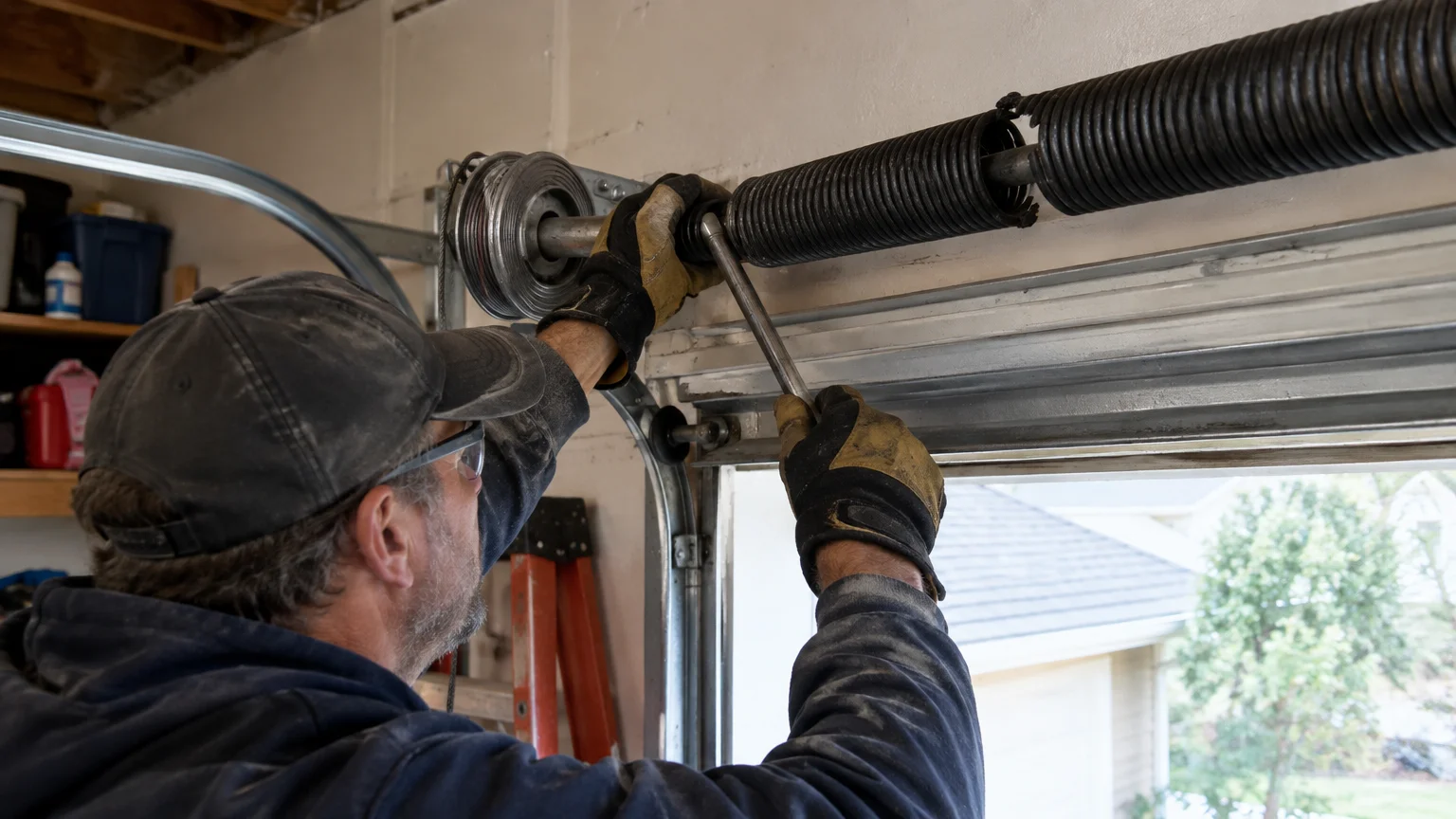
A torsion spring sits above the garage door opening. When it breaks, the coil often has a gap where the spring has split. It may still look mostly whole, so do not touch it or try to move its parts.
Extension springs usually sit beside the upper horizontal tracks. A broken extension spring may hang down, split apart, or pull away from its support. Safety cables may still be in place, but they do not make a broken spring safe to handle.
Loose cables are another warning sign. Lift cables wrap around drums or run beside the door. When spring tension disappears, a cable may come off its drum. It can then tangle or cause another repair problem.
Differences between torsion and extension spring failures
A torsion spring stores force by twisting around a shaft. An extension spring stores force by stretching along the track. Both types help lift the door, but their parts sit in different places and fail in different ways.
Avoid touching either type. A spring that looks broken can still leave force in nearby parts. A trained technician can secure the door, check the cables and tracks, and decide which parts need replacement.
What types of springs do garage doors use?
Most home garage doors use torsion springs, extension springs, or a mix suited to the door design. A torsion spring twists on a shaft above the door. An extension spring stretches beside a horizontal track. The right replacement depends on the door’s weight, size, hardware, and setup.
How torsion springs work
A torsion spring is a tight coil mounted above the door. As the door moves, the spring stores and releases energy through the shaft and drums. Lift cables then carry that force to the door’s lower corners.
Many newer garage doors use one or more torsion springs. A door may have one spring or two. The number does not show whether the system is safe for a homeowner to repair. The spring can hold strong force while the door is open or closed.
A technician checks the shaft, drums, bearings, cables, brackets, and door balance during spring service. Replacing only the spring can leave another worn part ready to fail.
How extension springs work
Extension springs stretch as the door closes. They are usually placed above the horizontal tracks on both sides. Safety cables pass through many extension spring systems. These cables can help contain a broken spring.
Older doors often use extension springs, but this design can still appear in newer homes. The spring size and length must match the door system. Choosing a part by looks alone can cause poor balance or too much force.
The phrase garage door spring types means more than the spring shape. It also covers the spring’s length, wire size, inside diameter, winding direction, and lifting duty. A qualified professional should check those details.
Can you open a garage door with a broken spring?
A garage door may be opened by hand after a spring breaks, but this can be dangerous. The door may be very heavy, fall quickly, or move unevenly. The safest choice is to leave it closed and arrange a professional inspection unless a trained technician gives a safe plan.
Why manual lifting can be dangerous
The springs balance much of the door’s weight. Without that support, a person may need to lift a heavy door with little control. The door can slip, bend the tracks, pull cables loose, or fall back down.
Never stand under a door that someone is forcing open. Do not use a car, rope, ladder, or makeshift brace to lift or hold it. Children, guests, and pets should stay away until the system is secure.
Do not keep using the opener to test the door. Repeated attempts can strain the motor and gear system. They can also worsen a cable problem or move an uneven door out of its tracks.
What to do if your vehicle is trapped inside
First, keep the door closed if it is resting safely on the floor. Check whether a side door or another safe exit is available. Do not remove brackets, unwind springs, or force the door upward.
If the door is partly open, keep everyone clear. Do not stand below it or try to hold it in place. A trained garage door repair professional can decide whether the door can be secured and opened safely. Marquette Garage Door Repair serves property owners and can help explain the next safe step.
Why should you avoid repairing a broken garage door spring yourself?
A broken spring repair is not a safe home project. The spring and nearby parts can store a large amount of force. A mistake can cause serious injury, damage the door, or leave the system unsafe.
Stored tension and the risk of serious injury
Stored tension means energy held inside a spring or another loaded part. When that energy is released without control, tools and metal parts can move fast. Hands, eyes, arms, and the head may be in their path.
Spring repair also needs special tools and safe steps. The work may include securing the door, controlling the shaft, removing tension, replacing parts, and testing balance. The steps change with the spring type and door design.
The same warning applies to changing garage door spring tension. A small adjustment can change force across the whole door system. Do not wind, unwind, cut, stretch, or clamp a spring at home.
How improper repairs can damage the door system
Wrong spring work can bend the shaft, damage drums, pull cables off their paths, or strain the opener. It can also make the door seem fixed while leaving it badly balanced. That hidden issue may lead to another failure later.
A professional can inspect related parts during Garage Door Spring Repair. The check may include cables, rollers, hinges, tracks, brackets, bearings, and the opener connection. If a cable has also failed, Garage Door Cable Repair may be needed.
Anyone searching for garage door opening repair or garage door opener repair should remember that the opener may not be the true cause. A broken spring can make a working opener seem dead. Checking the whole system helps prevent the wrong repair.
How long do garage door springs usually last?
Garage door springs do not all last the same amount of time. Their life depends on use, spring quality, door weight, weather, maintenance, and the condition of other parts. A spring that works today may still be near failure if it shows rust, gaps, stretched coils, or uneven movement.
What affects spring lifespan
Each opening and closing movement adds work to the spring. A busy home, rental property, shop, or business may use its door more often than a quiet home. Heavy doors and poor balance also place extra strain on the springs.
Rust can weaken metal over time. Moisture, dirt, loose hardware, damaged cables, and worn rollers can add more strain. A spring may fail sooner when the wrong part was installed or when the door was changed without matching the spring system.
Regular Garage Door Maintenance can help find wear before a full failure. Maintenance cannot make a spring last forever. It can help reveal cable damage, poor balance, and unsafe hardware sooner.
Signs a spring may be nearing the end of its service life
A spring may need attention when the door becomes noisy, uneven, heavy, or slow. Rust, stretched coils, loose parts, and repeated opener problems also need a check. These signs do not prove the spring has failed, but they should not be ignored.
A balance test should only happen when a trained professional says the door is safe to handle. Do not disconnect the opener or lift the door alone to test it. The safer plan is to arrange an inspection after a new change appears.
Why are garage door springs replaced in pairs?
Springs are often replaced in pairs when both springs serve the same door. They usually have the same age and workload. Replacing only one can leave uneven force across the door. The right choice depends on the system, spring condition, and inspection results.
How uneven spring tension affects door balance
A balanced door rises smoothly and stays near its position when used correctly. If one old spring works beside one new spring, they may not provide equal support. The door can sit crooked, move roughly, or place extra force on cables and the opener.
Uneven tension can also create safety problems. One side may lift first, or the door may close with more force than expected. This movement can harm tracks, rollers, hinges, and drums.
Pair replacement is not a rule for every door. Some systems use one spring, and some repairs involve one damaged part. A technician should identify the design before deciding what to replace.
When to arrange professional spring replacement
Arrange help quickly when the door will not lift, a spring has a visible gap, or a cable has come loose. Prompt service also makes sense when a door is stuck open and leaves the property exposed. Do not keep testing a failed system.
Marquette Garage Door Repair can help homeowners, business owners, and property managers understand whether Spring Repair, Garage Door Off Track Repair, or another service fits the problem. The repair plan should be explained after the system is checked.
Frequently Asked Questions
Can a garage door opener work when the spring is broken?
The opener may hum, click, or move briefly when a spring is broken. It may not have enough power to lift the door. Continued use can strain the motor and damage other parts. Stop pressing the remote and arrange an inspection. The opener may work, while the spring prevents normal movement.
Is a broken spring an emergency?
A broken spring needs prompt attention, especially when the door is stuck open, blocks a vehicle, or leaves a building unsecured. It may not always need immediate night service, but the door should stay unused. Keep people away until a trained professional makes the system safe.
Can a homeowner replace a garage door spring?
Homeowners should not replace garage door springs themselves. Springs store force, and the repair needs special tools, correct sizing, and safe door control. A mistake can cause serious injury or damage. A trained technician can replace the spring and check the cables, tracks, and opener.
What is the difference between spring repair and cable repair?
Spring repair addresses a failed or worn spring that helps lift the door. Cable repair addresses a lift cable that is loose, broken, tangled, or off its drum. These parts work together, so one failure can affect the other. A full inspection can find both problems.
Who services garage doors near me?
A local garage door repair company that handles springs and cables can inspect a failed system. Property owners should look for trained service, clear safety advice, and help with the right door type. Marquette Garage Door Repair can explain the next step without asking the owner to handle spring tension.
Key takeaways
- A loud snap, visible gap, heavy door, or loose cable can signal spring failure.
- A broken spring can make a working opener seem broken.
- Torsion and extension springs use different designs, but both can be dangerous.
- Homeowners should not wind, unwind, cut, stretch, or replace springs.
- Springs are often replaced in pairs when both serve the same door.
Conclusion
A garage door spring can fail without warning, but its signs are often clear. A heavy door, loud bang, visible gap, loose cable, or struggling opener should be treated as a safety issue. Stopping use and keeping people away can help prevent more damage.
The safest next step is a professional inspection. Contact us today for urgent garage door spring help from Marquette Garage Door Repair.